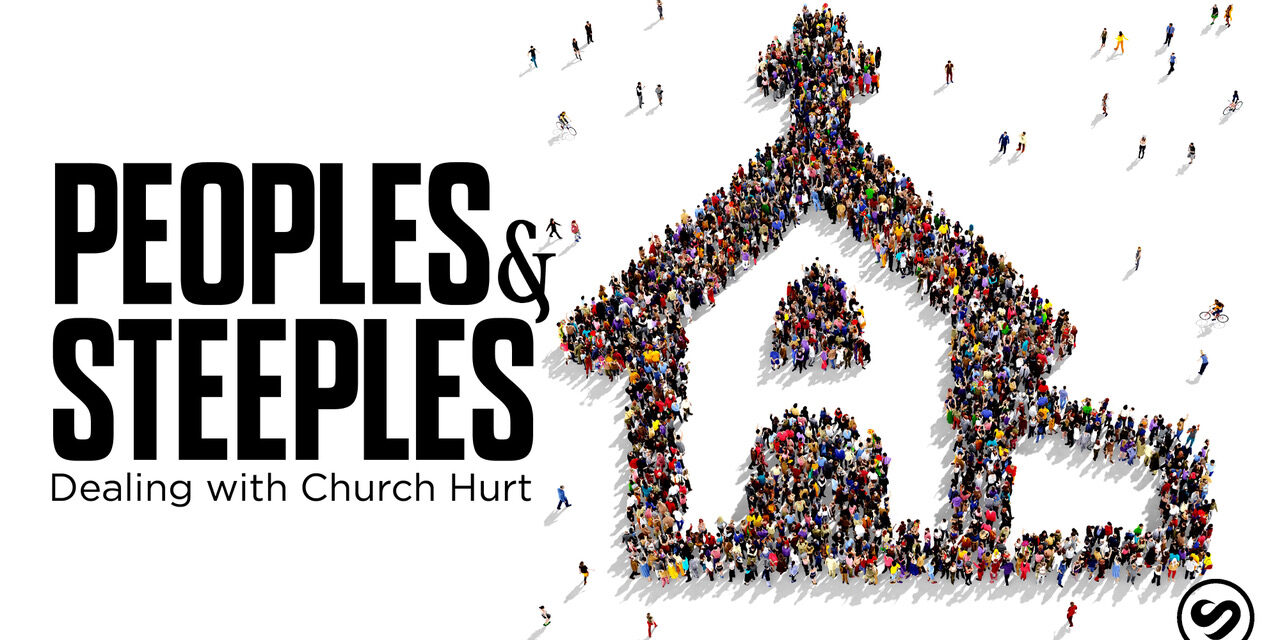
A few years ago, I shared a message series entitled, “Peoples & Steeples.” The series addressed the reality of church hurt. Everyone gets hurt at one point or another. My friend Dr. Ed Newton once said, “Church health begins when we recognize that church hurt impacts us all.”
I wanted to create a series of posts that go back to that series to help many who are either walking through church hurt recently or still recovering and healing from church hurt after many years. It is essential for those who have been wounded to heal. Because hurt people often hurt people.
“Everyone has a plan until they get punched in the mouth.” – Mike Tyson
People say hurtful words, inside the church and outside the church. They are said either flippantly or intentionally. And many times those words are shrouded in sarcasm. Pastors or church leaders abuse their power and hurt others. People embarrass other people or treat them unfairly. Sometimes people may even inflict physical harm. There’s no way to avoid all possible hurts, because everyone gets hurt at one point or another.
When we don’t deal with the hurts that come our way, they’ll linger in our souls despite all of our attempts to deny or suppress them. Over time they captivate our minds, they dominate our emotions, and eventually we become a slave to them… we take one step forward and three steps back.
And when we carry our hurt around, we end up hurting other people. Not necessarily intentionally, but the hurt of our hearts leak out. Jesus said in Matthew 15, “What comes out of the mouth proceeds from the heart.”
This is a load God doesn’t want us to bear and He’s provided the solution in Ephesians 4.
And do not grieve the Holy Spirit of God, by whom you were sealed for the day of redemption. Let all bitterness and wrath and anger and clamor and slander be put away from you, along with all malice. Be kind to one another, tenderhearted, forgiving one another, as God in Christ forgave you. – Ephesians 4:30-32
There are two broad ways we can handle our hurt.
1. Allow God to sit in the driver’s seat. (Ephesians 4:30-32)
Some hurts in life are minor and can be easily overlooked and quickly forgiven, but others are deeply wounding, and those who suffer from them usually have a hard time letting them go. Unforgiveness is a natural response to any offense but especially when we have been hurt by someone in the church.
But when we as believers are called to let God to sit in the driver’s seat of our lives (in the power of the Spirit) not like our old selves before we met Christ. The Lord can begin His healing work in our hearts.
So how do we allow God to sit in the Driver’s Seat? Scripture says to handle our hurt we remove or put away sinful responses like bitterness, wrath, anger, clamor, slander, and malice. Remove something must replace it with something. Instead, we are to respond in the Spirit with kindness, compassion, and forgiveness. This means we must stop feeding our minds with the wrong done to us. Even when we pray, we may be guilty of this if we remind the Lord of how much we’ve been hurt and how bad the person is who caused our pain.
If we don’t let God sit in the driver’s seat, there’s a downward progression… a downward spiral.
2. Allow our hurt to take the wheel. (1 John 2:9; 4:20-21)
When this happens, we refuse to forgive and, the hurt becomes a spiritual cancer deep within us. On the surface, things may appear fine, but … We begin to nurture the hurt by replaying it in our minds and emotions. We may develop a degree of hatred toward whomever has hurt us. It could be passively displayed by not wanting anything to do with that person, or aggressively with a desire to make the offender pay or suffer. And we struggle to worship the Lord or to hear from the Lord because we’re miserable.
Why does this happen? We usually blame our bad attitudes on the hurt we have experienced. But the truth is, no one can cause us to have an unforgiving spirit. Both anger and malice come from our heart. When they spring up, we can either accept them or reject them. If we allow these negative emotions to sit in the driver seat, they’ll gain control and overflow into every aspect of our lives. Bitterness, resentment, anger, and malice do not fit our identity as children of God.
We can’t claim to love God if we hate others. “The one who loves God must also love his brother and sister” (1 John 4:21).
This command doesn’t only apply to those people who are lovable, but even to those who hurt or wrong us at times. This isn’t something we can do in our own strength but only by the power of the Holy Spirit within us. When we walk in the Spirit and not in the flesh, we’re able to overlook offenses, remove sinful attitudes, and respond with kindness, compassion, and forgiveness.
What happens if an unforgiving spirit controls the driver seat of our lives?
Damaged Emotions. Healing comes with forgiveness, but when we hold onto our hurts, it steals joy and contentment and replaces them with bitterness, anger, and resentment. Good emotions are frozen, and we can’t love or accept love from others or God.
Eroded Fellowship With the Lord. You can’t hold onto sinful attitudes and be right with God. Your prayers will feel useless, your love for Him grows cold, gratitude dries up, and your praise is empty. The only way to be set free is through the healing of forgiveness.
Distant Relationships with Other People. There’s no way to hide internal bitterness, resentment, and hostility from family, friends, co-workers, and fellow believers. Hurt if not healed creates walls. We say to ourselves, I can never trust someone at a church again. I will never get involved in a church again. I may attend, but I’ve seen too much. I’ll just slip into a worship service but not connect with people and the walls create distance.
Harms Health. The attitudes and emotions we carry affect us physically in a variety of ways. Sometimes we seek relief from doctors, but they can never fix the roof of the problem.
God commands us to forgive one another. When we choose to release the burden caused by another, our healing will begin.
God commands us to forgive one another. This doesn’t mean forgetting, denying, excusing, or tolerating mistreatment. It means putting aside the debt and no longer holding it against the offender. There’s no guarantee that everything will be right in the relationship. We’re not responsible for the other person’s actions. Our responsibility is to obey God by forgiving.
If one who hurt us is not available or has died, we can still forgive by imagining that person sitting in a chair across from us as we offer forgiveness, or by writing a letter. If we’ll let go of this burden, our healing will begin.
Have you suffered a deep hurt that is still affecting you today? How have you dealt with it so far? How has rehearsing the wrong in your mind affected your pain?
What stops you from forgiving? What steps can you take to begin the process? Take those steps today.